
Have you ever considered what would happen if Africa fell behind in today’s race for financial technology innovation? If Africa lags behind in this race, it risks missing out on significant economic growth, enhanced financial inclusion, and improved business efficiencies. Falling behind could leave consumers and businesses struggling with outdated, cumbersome payment processes, while the rest of the world moves ahead.
This is why innovation is crucial — not just for convenience, but for keeping pace with global digitalization. With Africa’s current e-payments market revenues expected to increase by approximately 20% annually, reaching around USD 40 billion by 2025, it is only fair to mention that this growth underscores the critical need for a robust payment orchestration platform that can integrate and streamline any digital advancements effectively.
Paysecure’s orchestration platform stands out as the premier solution for banks and merchants across Africa. Our platform offers seamless, user-friendly payment flows that can significantly enhance the digital payment experience. With everything in place, from security to integration capabilities, Paysecure ensures that banks can offer their customers top-notch service, while merchants can enjoy smoother, faster transactions.
Stay with us as we delve deeper into the most popular payment solutions in 4 main African countries: Nigeria, Ghana, South Africa, and Egypt, and explore how Paysecure can be the game-changer your business needs in this digital age.
Overview of Africa’s digital payment landscape
Africa presents a fertile ground for growth in digital payments due to its young, urbanized demographic and technological trends. With the fastest population growth rate in the world at 2.7% annually, and a median age of just 20 years, the continent is primed for digital innovation.
A significant portion of the population prefers mobile accounts. Globally, registered mobile accounts reached 1.75 billion in 2023, a 12% increase from the previous year, with 856 million of these accounts in Africa alone. Its transaction volume stands at an impressive 62 billion, highlighting the shift towards mobile-based financial solutions.
Another factor that contributes to Africa’s accelerated digitalization is the new and innovative technologies such as the integrated universal QR codes. Ghana’s GHQR and Nigeria’s NQR (Quick Response service) enable seamless payments from bank accounts, mobile money, and cards. Interoperability between competing mobile wallets has also been achieved in most countries, facilitating smoother transactions across different platforms.
The rise of real-time payments infrastructures is another critical development. Nigeria ranks among the top ten globally for real-time transactions, surpassing the US, Japan, and Brazil. Kenya is projected to be among the fastest-growing countries for real-time payments, while Egypt and Ghana have already introduced instant payment regulations and systems. Countries like Tanzania are following suit, further embedding real-time payment capabilities.
Both bank and non-bank solutions are thriving in this environment. Ghana provides tailored licenses to various financial entities, while Egypt employs a bank-led model requiring fintechs and PSPs to partner with banks. Egypt’s tiered KYC system and gender-inclusive national ID cards facilitate financial inclusion and ease customer due diligence.
Open Banking offers radical innovation opportunities by allowing different business models to integrate with legacy banking systems. This approach reduces the cost of developing, launching, and servicing products, enabling the creation of customized, affordable solutions for merchants.
For banks, these developments present numerous opportunities:
- Leveraging existing infrastructure to capture the offline payments market.
- Delivering embedded finance by integrating lending and other products into customer journeys and third-party platforms.
- Offering payments-as-a-service to reposition capabilities as an integrated growth platform for innovators.
- Developing ecosystems that consolidate customer transaction enablement across various verticals.
“To stay competitive in the global digital transformation trend, Africa must reduce friction in both domestic and cross-border payments. With Paysecure’s whitelabel solution, banks and businesses alike can deploy their own branded payment gateway, underpinned by dedicated servers and PCI DSS-compliant software. Our setup guarantees robust security measures and a user-friendly interface that meets the diverse needs of both consumers and businesses.”

Lead digital transformation with Paysecure
8 key drivers of digital transformation in Nigeria
Nigeria has emerged as a leader in financial innovation within Africa, driven by several key developments and popular payment methods that are transforming the country’s digital payment landscape.
- One of Nigeria’s most significant achievements is the Instant Payment (NIP) system, built by the Nigeria Inter-Bank Settlement System Plc (NIBSS). Launched in 2011, NIP is now the largest instant payment service in Africa and among the top six globally. It supports real-time bank transfers and has expanded to include 22 commercial banks, 20 microfinance banks, and 6 mobile money operators. The system’s integration into various channels like internet banking, mobile apps, USSD (Unstructured Supplementary Service Data), POS, and ATMs has facilitated electronic transactions worth N387 trillion in 2022.
- Open Banking is another area where Nigeria is making significant strides. The country has standardized API access, allowing for seamless integration and fostering innovation. NIBSS plays a crucial role in supporting government-to-person (G2P) payments, hosting and validating transactions for all governmental social intervention programs.
- Mobile payments and USSD codes have become highly popular in Nigeria. Services like Paga and Opay have driven substantial increases in mobile payment volumes, thanks to the adoption of fintech solutions and rising smartphone penetration. USSD codes remain a vital transaction method, especially in regions with lower internet access, providing an accessible and efficient way to conduct financial transactions.
- Cards, including debit and credit primarily from Visa and Mastercard, are widely used for both online and offline transactions. The increasing acceptance of card payments by businesses further facilitates their use across the country.
- Bank transfers are leveraging the convenience of internet banking and mobile banking apps. These methods are popular for their ease of use and efficiency in transferring funds.
- Online payment gateways have streamlined eCommerce transactions, making it easier for businesses to accept payments and for consumers to complete purchases online.
- QR code payments are becoming increasingly popular for quick and contactless transactions. The introduction of the New Quick Response (NQR) platform in 2021 has made QR code payments more accessible and widely used across Nigeria.
- eWallets like Kuda Bank offer easy and efficient digital banking solutions. Such platforms provide users with enhanced accessibility and a better overall banking experience.
In Africa’s financial landscape, Paysecure stands at the forefront with a sophisticated payment orchestration platform tailored to meet the unique challenges and opportunities faced by banks across the continent. Our platform seamlessly integrates a wide array of payment methods and innovations, offering banks and merchants comprehensive solutions that enhance efficiency, security, and customer satisfaction.
With integrations encompassing global providers, banks, and local African mobile payment services, our platform enables businesses and financial institutions to expand their service offerings swiftly and efficiently. This breadth of integration enhances operational flexibility and market reach.
3 payment methods revolutionizing South Africa’s digital economy
As of March 2024, debit cards are the most commonly used online payment method in South Africa, accounting for 58% of transactions. Payment platforms such as PayPal, Klarna, and Google Pay follow closely at 48%, according to Statista.
The South African real-time payments market, valued at USD 11.44 billion in 2021, has been on a robust growth trajectory. By 2026, it is projected to reach an impressive USD 25.90 billion, reflecting a compound annual growth rate (CAGR) of 17.8%. This remarkable expansion is driven by concerted efforts from businesses, consumers, and regulators to foster a digital payment ecosystem that prioritizes security, efficiency, and inclusivity.
- In South Africa, debit and credit cards are a predominant payment method, widely used for both online shopping and in-store purchases. By January 2020, credit cards accounted for 41% of eCommerce transactions. The popularity of card payments stems from their ease of use, security, and consumer familiarity. Transactions are encrypted and come with customer liability protection, making them a reliable choice for many.
- As of January 2020, bank transfers made up 20% of all eCommerce purchases in the region. This method appeals to consumers who prefer direct control over their finances, allowing them to transfer funds directly from their bank accounts to merchants without revealing sensitive financial information online.
- The growing popularity of eWallets in South Africa highlights the nation’s embrace of digital innovation. eWallets, such as SnapScan and Zapper, offer a convenient and secure way to store payment information and make transactions with a few taps on a mobile device. These digital wallets cater to various needs and preferences, fitting seamlessly into the digital lifestyle of modern South Africans.
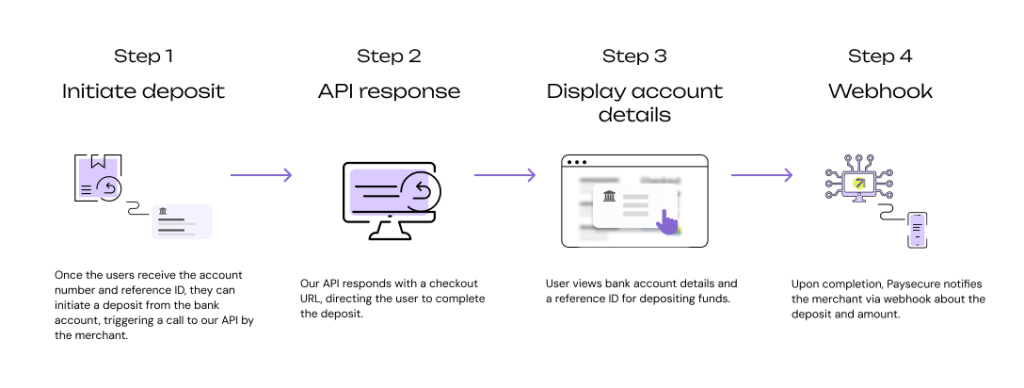
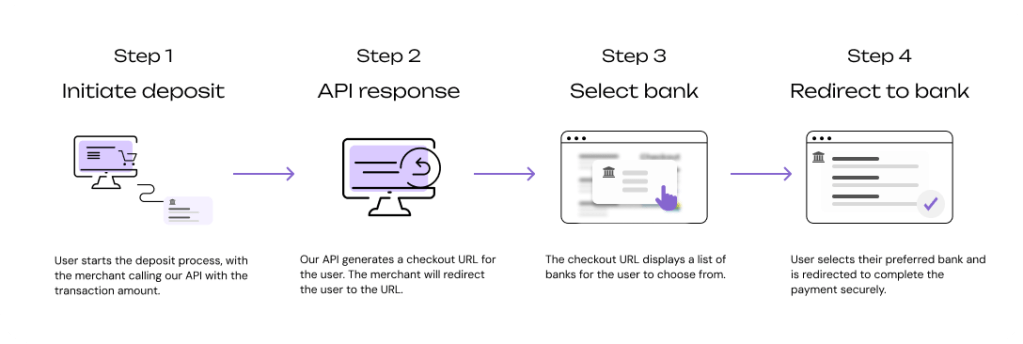
Paysecure offers intuitive payment flows designed to simplify the transaction process for end-users. Whether it’s through Account Transfers (Manual EFT) or Instant EFT, our platform ensures seamless interactions that enhance user satisfaction and increase transaction completion rates. Here is how simple and efficient our flow is:
Account transfer (Manual EFT):
Instant EFT:
Ghana’s top 6 innovations transforming transactions
Ghana has demonstrated a strong preference for secure payment infrastructures, catering to businesses and consumers alike through mobile money, cards, and online platforms. This trend is evident in the substantial growth of mobile money transactions and the widespread adoption of various digital payment solutions.
- Mobile money is the dominant payment method in Ghana, with platforms like MTN Mobile Money widely used for various transactions. In 2023, the total value of mobile money transactions reached GH¢1.912 trillion, an 82% increase from GH¢1.07 trillion in 2022. Monthly transaction values in 2023 exceeded GH¢100 billion, peaking at GH¢179.2 billion in October and GH¢185.9 billion in November. In the first four months of 2024, transactions totaled GH¢779.1 billion, a 41.55% increase compared to the same period in 2023. The mobile money market is expected to grow at a CAGR of 19.2% from 2024 to 2032, reaching USD 789.5 billion by 2032.
- Significant digital wallets and internet banking players, including GTPay, ExpressPay, Interpay, and Myghpay, offer comprehensive online payment solutions, enhancing the digital payment landscape.
- The GHQR, a QR code payment method that facilitates instant payments without fees, is a popular choice for quick and contactless transactions. It provides convenience to both consumers and businesses as it reduces transaction times and enhances the overall efficiency of financial transactions in Ghana.
- Blockchain technology is increasingly utilized to enable instant and free money transfers. This technology offers secure and efficient transaction methods by leveraging decentralized networks and cryptography. It enhances transparency, reduces transaction costs, and accelerates the speed of financial transactions, benefiting both individuals and businesses seeking reliable and cost-effective payment solutions.
- Through the USD Global Wallet, Ghana facilitates cross-border money transfers and financial services, enhancing international financial connectivity. By providing international financial connectivity, it allows individuals and businesses in Ghana to engage seamlessly in global transactions. This capability boosts economic activities, fosters international trade relations, and expands opportunities for financial inclusion by connecting Ghanaian users to global financial markets.
- Digital platforms in Ghana have revolutionized everyday transactions by offering seamless utility payments, internet subscriptions, and airtime top-ups. These platforms simplify financial management for consumers, offering convenient ways to pay bills and access essential services online. This accessibility enhances user experience, increases financial efficiency, and promotes digital adoption across various sectors of the economy.
Paysecure’s team comprises industry specialists and R&D experts strategically located across regions like Africa, Asia, and Latin America. This global presence ensures that we provide localized support and expertise, understanding the unique regulatory environments and market dynamics in each region.
Our platform allows access to advanced data analytics tools that provide deep insights into customer behavior, transaction trends, and business performance. What is more is the fact that with Paysecure’s Analytic Report, there are no limits on the number of transactions that can be explored. This capability empowers merchants and banks to make informed decisions, optimize processes, and tailor services to meet specific market demands.
Support sophisticated electronic payment systems with the best infrastructure
Egypt’s 3 main evolving digital solutions
Egypt’s population is progressively gravitating towards electronic payment networks that offer diverse payment services and enhanced solutions for merchants. The country’s payment infrastructure, exemplified by systems like Meeza Digital (a cross-domain Egyptian National Payment Scheme) and InstaPay (an instant payment system mostly focused in P2B), is evolving towards integrated and versatile payment solutions. These advancements bolster the capacity for a wide range of financial transactions, catering to both personal and business needs, marking a shift in Egypt’s digital payment landscape.
- Mobile platforms like Vodafone Cash and Orange Money are popular in Egypt for digital transactions. Mobile wallets facilitate convenient and secure payments, empowering users to conduct transactions digitally without the need for physical cash. Their widespread adoption reflects a growing preference for mobile-based financial services among Egyptian consumers.
- Credit and debit card usage is prevalent in Egypt, with banks like CIB (Commercial International Bank) offering robust online payment solutions. The high penetration of bank cards, especially in key markets such as Egypt, Morocco, and South Africa, supports the nation’s digital payment ecosystem, enabling seamless transactions online and offline, and contributing significantly to the revenue streams of financial institutions.
- There is a growing trend towards using eWallets, payment networks, and internet banking for their convenience and security in transactions. Digital payment platforms have witnessed substantial year-on-year growth, driven by initiatives from both the government and private sector to promote financial inclusion and digital transactions in Egypt. At the same time, electronic payment networks like Fawry saw an increase in use due to its convenience and security in transactions.
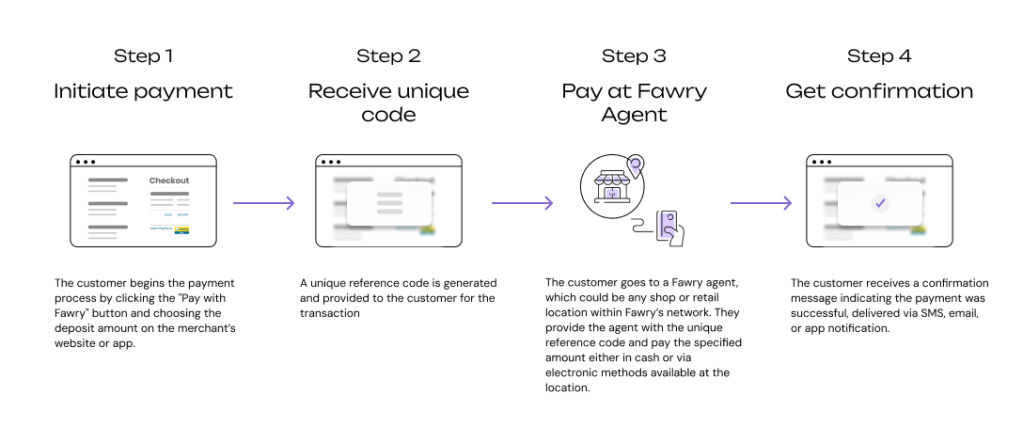
In Egypt, our solution empowers consumers to utilize Fawry Pay for fund transfers from their bank accounts or through Fawry’s extensive network of retail locations and online services. Fawry is a leading Egyptian payment network that facilitates secure transactions both online and offline across a variety of financial services. This platform provides multiple payment options, including Fawry Pay.
Paysecure’s Fawry PayIn feature leverages this robust payment network to support diverse collection scenarios. Merchants can initiate payment requests via mobile apps, online platforms, or physical retail points, offering secure, efficient, and flexible options for collecting payment from customers.
Paysecure’s Fawry flow:
Empowering Africa’s businesses with Paysecure’s payment orchestration platform
Our commitment is to empower merchants and banks with the tools and expertise needed to navigate the digital transformation of financial services in Africa successfully. By partnering with Paysecure, businesses and financial institutions in Africa can:
- Enhance operational efficiency: Streamline payment processes and reduce operational costs through our scalable and customizable payment solutions.
- Expand market reach: Access new customer segments and geographical markets through our extensive network of integrations and partnerships.
- Ensure compliance and security: Mitigate risks associated with payment processing through our PCI DSS-compliant infrastructure and stringent security protocols.
- Drive innovation: Stay ahead in the competitive fintech landscape by leveraging cutting-edge technology and continuous R&D investments from Paysecure.
Join Paysecure in shaping the future of payments and banking with innovative solutions that drive growth, enhance customer loyalty, and unlock new revenue streams.
